|
Secrets of success in China |
| Managing Intellectual
Property |
|
While eager to do business in China, many foreign investors remain
concerned about the lack of protection and enforcement of IP rights. In
a special roundtable debate organized by MIP, leading figures
discuss how to succeed and what needs to change in the country
|
About the participants
|
Judge Jiang Zhipei
is the Chief Justice of the Intellectual Property Rights
Tribunal of China's Supreme People's Court. |
|
Shi Xiaomei
is a patent attorney and member of the board of directors of
China Patent Agent (Hong Kong). |
|
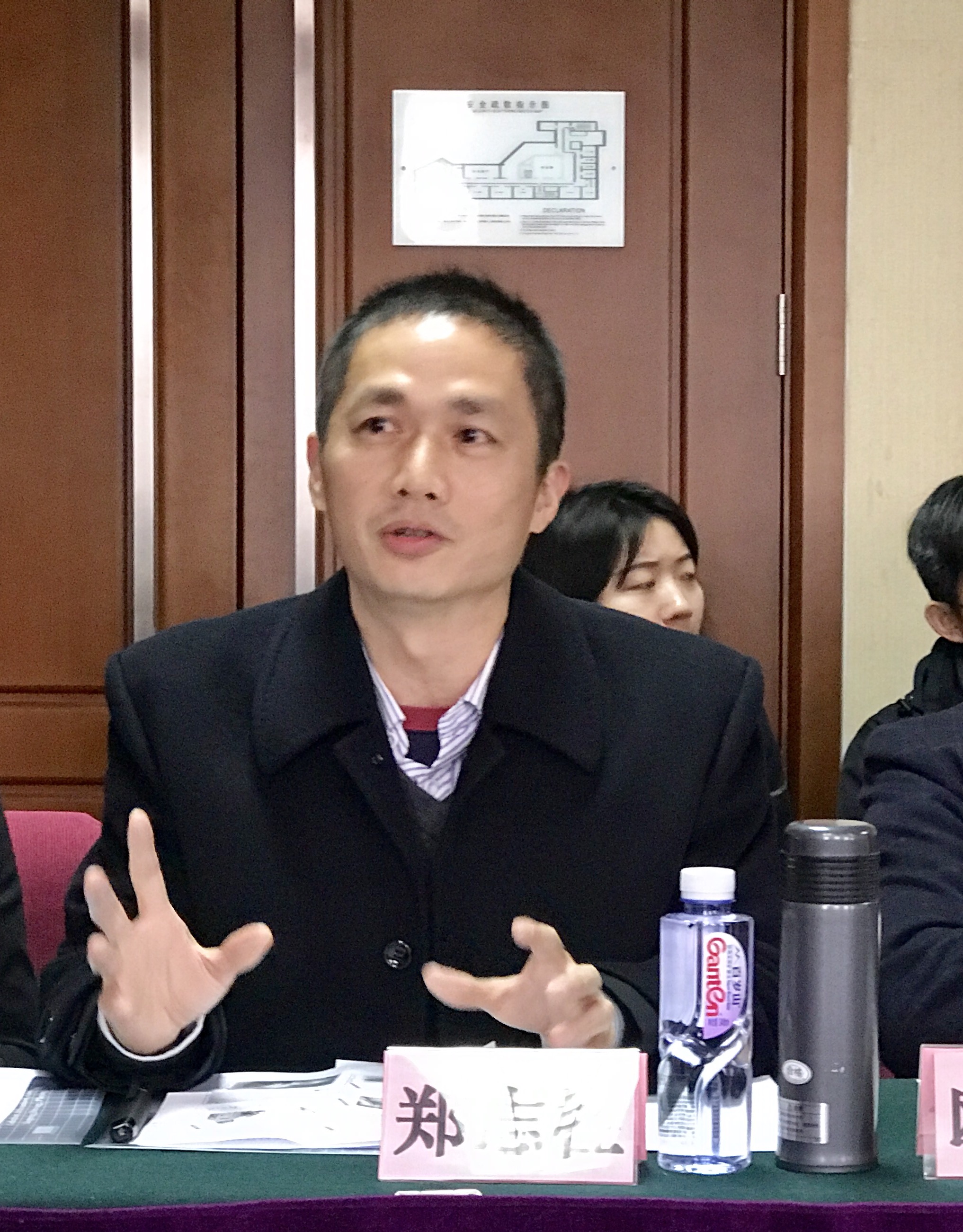
Professor Zheng Chengsi
is the director of the Intellectual Property Centre at the China
Academy of Social Sciences, a WIPO and CIETAC arbitrator and a
congressman and member of the National Congress Law Committee.
|
|
Emma Barraclough
is Asia editor of Managing Intellectual Property. |
|
Wen Xikai
is deputy director general of the Law & Treaty Department of the
State Intellectual Property Office. |
|
James Haynes
is a US patent attorney. He is co-chair of the American Chamber
of Commerce-PRC's Intellectual Property Forum and is a partner
of Beijing based IP firm Tee & Howe. |
¡¡ |
Emma Barraclough:
China is drafting new guidelines about the thresholds for bringing
criminal actions against counterfeiters. There is debate over whether
thresholds will be based on the value of the counterfeit goods or the
genuine ones. Will the new guidelines provide a sufficient deterrence?
Judge Jiang Zhipei
By the end of this year the Supreme People's
Court will hopefully issue a judicial interpretation on this issue,
which is more about how to lower the criteria for criminal action for
counterfeiters. Up to now there have been five drafts of the
interpretation and we hope to see the final version by the end of the
year. Last month the Supreme Court asked many criminal law experts to
participate in a conference about it. Actually this issue is not as easy
as it looks. It is not about whether people would like to protect
intellectual property or not. It is more about how many people we are
going to send to prison. And about how you can protect IP when China is
experiencing such dramatic economic development.
Westerners often like to address problems directly whereas in China
people are more likely to talk about abstract concepts or the background
of the issue. I prefer the Western style but I think some background is
necessary here. China is still a developing country. Although a lot of
big cities are very developed, there are still many places where people
don't
have enough to eat and there is a big imbalance in terms of economic
development and people's
lives in China as a whole. There are more urgent issues to be addressed
that IP protection.
After mentioning that, we can talk about this question more directly. To
be frank, counterfeiting is very serious in China. It’s
not only a direct problem of IP infringement. The infringement has also
damaged the social order and even taken innocent people's
lives. Some cases are very serious. I am a judge and sometimes I want to
be able to impose longer sentences or to require defendants to pay
higher damages. My hope is that in the final version of the judicial
interpretation we will see that threshold will separate the genuine
value of the authentic goods from the illegal gains from the
counterfeiting. The threshold should be based on the value of the
genuine goods.
There are two challenges in the drafting of the judicial interpretation.
First is in the technical field - how many people are we going to be
sending to prison? That really is a big concern. The second issue is
that we have this concept of illegal income in China. In the criminal
law system illegal income is one of the criteria for calculating the
punishment. We are faced with the issue of how to calculate the illegal
income from IP infringement. In civil procedures the problem has been
solved and now it is easy to calculate. You just work out how many
genuine goods have been produced and sold. But in criminal IP
infringement cases it can be more complex. For example, if someone makes
fake Rolex watches. A genuine Rolex may cost, say, Rmb 400,000. But does
that mean that if someone makes one fake Rolex they should go to prison
for a long time? So experts are discussing this issue at the moment to
see how the judicial interpretation on this issue fits in with other
interpretations in this regard.
As a judge in civil cases and also as an expert in IP issues I welcome
the issue and enforcement of the judicial interpretation - it will do a
lot to help stop infringement. But on the other hand, we cannot expect
too much from this, because it can't
solve all our problems. I think more efforts should be made in the
investigation and appeal stages. We must send criminals into court. Each
year the total number of civil, administrative and criminal cases
relating to IP comes to about 15,000 cases in China. At the same time,
other cases amount to between 5 million and 6 million each year. Chinese
judges have been waiting for a long time to see those criminals
sentenced. We never complain about the number of IP cases. And I hope
that foreign - and Chinese - businesses can do more work to help send
those criminals to court. I think more effort could be made on
investigation work. And of course, more education in society about IP
infringement issues would help too.
James Haynes:
First, on the question of how you value the goods. Judge Jiang has a
good point. People who make fake watches can put any label they want on
them - should they get a different jail term when they put a Timex label
on the watch than if they put a Rolex label on the watch, when they are
making the same watch either way? So there is some logic to base the
punishment on the counterfeit value. But it must be realized that the
penalty threshold can be adjusted so the same penalty is received no
matter which value the threshold is based upon. For example, if the
original watch is worth $100 in the marketplace and the counterfeit is
worth $10 the threshold could be set depending upon which value is used.
In other words, if the threshold is based on the value of the
counterfeit good then a $10 threshold should be used, whereas if the
threshold is based upon the value of the original good then the
threshold could be set higher at $100. So which value you use isn't
as important as to properly match the threshold to whatever valuation
scheme you ultimately choose. But as Judge Jiang said, the actual
threshold number you choose is not the final goal. The key is to find
out what threshold works. Where should the threshold be set to get the
results desired - to be a deterrent to counterfeiting? That's
the question. So, will a particular threshold be sufficient to act as a
deterrent? Who knows? A Chinese Supreme Court group working on the new
guidelines asked AmCham for a recommendation as to where to set the
level. Although we suggested a value, we don't
know. China is in such a unique situation right now. There is more
counterfeiting going on here than anywhere else in history. A big part
of the society and economy is built around creating counterfeit goods.
So what will it actually take to stop counterfeiting on such a large
scale? We don't
have a problem of that magnitude in the West. Of course, we get a few
counterfeits, and we have our one famous street - Canal Street in New
York City, where everyone says you can go and get counterfeit goods. But
the US doesn't
seem to be able to shut down Canal Street - how can China shut down a
thousand Canal Streets in Beijing alone? It's
just such a different problem and I think it's
got to have a Chinese solution. China needs to get to work itself to
determine what it takes to solve the counterfeit problem. The
frustration that companies in AmCham are facing is that a reduction in
counterfeiting does not seem to be happening and we don't
know really how to make it happen in a society as different as China. We
take cases to court and everyone seems to get off and nothing seems to
improve - there can be thousands and thousands of cases and you still
have the counterfeiters.
|
The jargon
SAIC
The State Administration on Industry and Commerce oversees the work
of the Trademark Office (which is in charge of registering marks,
giving guidance to local administrative authorities for industry and
commerce (AICs) in handing trademark infringement and counterfeiting
cases). AICs have the power to investigate infringement cases and
pursue administrative actions. They can stop the infringement, order
the counterfeits to be destroyed and levy fines.
SIPO
The State Intellectual Property Office, under the State Council,
examines foreign and domestic patents and supervises local SIPO
bureaus. SIPO officials also handle the administrative enforcement
of patent infringements and draft laws and regulations on IP.
PSB
Administrative bodies such as AICs may transfer serious infringement
cases to the police (Public Security Bureau) and prosecutors (procuratorate)
so that they can launch a criminal investigation. In 2003 the AICs
investigated 37,489 cases relating to breaches of the trade mark
law. Just 45 were transferred to other bodies so they could be
prosecuted under criminal law.
NPC
The National People’s
Congress (and its standing committee) is China’s
highest law making body. It also supervises the work of the Supreme
People's Procuratorate and the Supreme People's Court.
The Supreme People's Court
The highest judicial organ in China. The SPC is responsible to the
NPC and its standing committee. The court gives judicial
interpretation of questions about the way the law should be applied
in judicial proceedings. Its instructions must be followed by other
courts. |
EB:
Presumably there is support for the guidelines though?
JH:
Of course. Penalties must increase. But back in 2002 China raised the
penalties for counterfeiting trade marks from 50% of the operation value
to 300% and yet counterfeiting continued to increase. Of course China,
with its very large population, doesn't
want to throw a lot of people in jail as an answer to the counterfeit
problem. But the West is feeling a lot of frustration - something's
got to be done. As Judge Jiang said, you must start to make it
economically unviable to counterfeit. Now it's
economically an attractive thing to do. It doesn't
hurt to counterfeit, in fact you make money by counterfeiting. If you
try to operate a legitimate business you wont
be able to make as much money.
Wen Xikai:
China is a unique country, like James said. In order to protect IP of
course you need severe penalties. However, you need to take into
consideration that China is a very large country and a large part of it
is still very poor and you need to think how to balance that against the
punishments. A friend of mine who is a Chinese administrative official
told me that he had personal experience of going to stop street vendors
from selling counterfeits. And in one case, after his goods were taken
away, the poor vendor committed suicide. So you need to take this issue
of poverty into consideration. So I think people need to protect their
IP but we also have to balance the thresholds. But you must also
gradually educate people about protecting IP and that will take a very
long time. |
Zheng Chengsi:
In China, jail is mainly for drug struggling and robbing and killing people.
Many scholars would think it was very stupid to put someone into jail for IP
infringement. For example, if someone downloads a film illegally from the
internet in the US - it may be more damaging to the company than copying
discs and selling them - but do you put those people in jail? I think the
problem in China is that people cannot recover the economic damage caused by
IP infringement. Another problem is that many infringers are companies. If
they infringe IP once and again or even frequently, you must close them
down. But the way that China does it isn't
effective enough. That is the main reason why counterfeiting is so rampant.
I think our problem is the enforcement is far from adequate -it can's
punish the infringers economically. Some people aren't
afraid of going to jail - they perhaps have some guanxi (connections)
and can get released the next day. Although we have promised to strengthen
criminal sanctions I don's
think it is a good way. I don't
think it's
an effective way. If you can punish them economically - to close down their
businesses, that would be more effective. That's
the critical point.
Shi Xiamei:
I think that education is still the most important area if you want to
tackle infringement. We are a developing country with our own situation. I
agree with Professor Zheng. We should punish the biggest infringers. But the
biggest problem for us as an agency is finding really excellent
investigators. How can you find the main source of the counterfeits? It's
very difficult.
ZCS:
It needs the help of the police.
SXM:
Yes, the police or some special expert investigator. As we see it in HK, we
invite some investigation company?
ZCS:
But in China that could be illegal. The problem is that the police might not
always do anything and there can be difficulties using an investigation
company.
SXM:
Yes,
you're
right. We just punish the person selling the fakes - but that isn't
the most important thing. Then the second point is how to punish them? We
ask the local AIC to take some infringement action. But how do they
calculate the fine? Sometimes they calculate it based on the contract they
signed with the producer, but it's
very difficult to say. Take handbags for example - a genuine one might sell
for HK$5,000. But in a market you might be able to buy one for HK$50. How is
the AIC to calculate the fine? It really creates difficulties. They base it
on the HK$50 dollar price. But some foreigners think this is not enough.
EB:
Some IP owners say that they prefer not to use administrative measures to
tackle piracy because they don’t
act as a deterrent to repeat infringers. Should the measures be
strengthened? If so, how?
ZCS:
I think this also relates to questions about cooperation between IP
enforcement bodies. I have seen many big changes taking place in China. This
year the central government has determined that it will use administrative,
judicial or legal means to crack down on counterfeiting acts and to improve
the economic order in China. So I think many of you have seen on TV and
newspapers that more efforts will be made to crack down on counterfeiting.
Central government has named 15 provinces as the key centres of this action.
Some experts once suggested that if you can't
crack down on counterfeiting in China as a whole then why not try those big
cities that sell most of the counterfeits. I think measures will be taken
not only to fine counterfeiting companies but also to send those people to
court. According to the State Council, if there are any officials involved
then China will punish them.
In many other countries the police investigate counterfeiting acts. But in
China we have various types of crimes and so the police force is rather
weak. At the moment I think it is very important to give the full play to
the efforts of the administrative organizations. Once they find
counterfeiting companies they can send them to court. I am also very pleased
as a judge to see that this year the Supreme People's
Procuratorate has made it one of their top priorities to crack down on IP
infringement. Only by paying more attention to this can we see a big change
in our country. By taking administrative actions, companies making genuine
goods in China will not have to spend too much money or effort trying to
control counterfeiting cases. Administrative organizations can help them do
a lot in this regard. So I think with the joint efforts with criminal, civil
and administrative actions we will see a big change in a few years.
Let's
take a step forward. If IP is really a very important issue for China then
maybe in the future a specific group of police will be established to
investigate IP infringement. A special bureau or organization could be
established under the People's
Procuratorate and a special court or tribunal could be established to
sentence these people. But the thing we are waiting to see is how important
it is in China. In my opinion, these suggestions will not happen in the near
future. However, if we can just concentrate the efforts of the
administrative organizations or the police a little bit better than at
present then maybe we will see better results.
EB:
what are your clients telling you about their experience of administrative
measures? Are they still useful?
SXM:
I think most of our clients still want to use all options. Generally
speaking, in trade mark infringement cases they still mostly prefer
administrative measures. And for utility model and design patent cases they
may use administrative measures because it's
less expensive and they want to stop the infringement straight away - they
don't
want to get money back. Of course we prefer administrative action to be
brought in the big cities - officials have more experience and there is less
localization. That's
very important.
JH:
Do our clients find administrative measures a deterrent? They do and they
don't.
It depends upon the actual situation. One client commented how good IP
protection was in China: They found a counterfeit in the market place on
Monday, Tuesday we sent out an investigator. By Friday the raid was finished
and the counterfeiting was stopped. So if you have one counterfeiter of one
product, and you stop that one, then you're
in good shape. But if you have a thousand counterfeiters and you stop just
one, then what have you gained? Several years ago it was preferable to go to
the administrative agencies because they would stop the infringement
quickly, at least for that one case. But i's
not a long-term solution because the penalties are not enough to prevent
others from counterfeiting. So which route is best, administration or the
courts, also depends upon the size of the company doing the counterfeiting
and the proof that IP owners are able to obtain about the quantity of
counterfeiting. With the courts getting better and the judges becoming more
educated in IP law, we are now commonly advising clients to go through the
court system. Not only do you stop the counterfeiting but it has a bigger
influence on other counterfeiters since damage awards are increasing. You
can do the administrative action first and then go to the courts.
Of course penalties should be boosted in the administrative agencies. The
agencies must take an active part in stopping counterfeiting because there
are now too many cases for the courts to handle. I'm
very pleased to hear about the 15 provinces Judge Jiang mentioned that are
attempting to determine ways to stop the counterfeiting within their own
province. China is a great ongoing social experiment. There is an effort to
get counterfeiting penalties standardized. This effort is the result of the
frustration over the fact that some locations make penalties way too low.
But it's
not yet known what penalties are sufficient to solve the counterfeiting
problem. China achieved remarkable economic progress by opening up its
economy. Its economic model was based on allowing the provinces to
experiment with their own economic programmes. Then the country could see
which province was doing the best and which techniques received the best
result. This same model should also be used to solve the counterfeit
problem. Rather than use a centrally mandated solution, allow the provinces
to experiment with different penalties and schemes to stop the
counterfeiting. Then see what method and penalties are most effective to
solve the problem.
To do that though, you need to have the ability to gauge the amount of
infringement that is taking place. Measures commonly mentioned by the
Chinese to demonstrate the anti-counterfeiting effort such as how many CDs
you're
crushed or how many court cases you have, is not a good gauge of whether
counterfeiting methods are succeeding. In fact, those increasing numbers may
mean just the opposite. What is needed is a standardized survey mechanism to
obtain a "counterfeit index" which could be used to gauge the effectiveness
of the programmes or penalties to decrease the level of infringement taking
place in the marketplace. That way, one could see which areas of China are
the most effective and what they are doing right.
WXK:
I think IP owners may well choose which way to go - either through the
judiciary or the administrative way. As far as patents are concerned, I
think to deter and get a quick result against repeated infringement it is
better for them to go the administrative way. Of course the administrative
way cannot replace the judicial way, but for patents, the administrative
authorities for patent affairs may well make a decision about repeat
infringers - they do not need to investigate the facts again according to
our administrative measures published by SIPO.
EB:
Do foreign companies criticize China's
record on enforcement unfairly while failing to protect their own IP assets
properly?
SXM:
I don't
think all of our clients would criticize China for IP prosecution. But in
terms of enforcement, they do have some questions about getting preliminary
injunctions, how to bring criminal actions, the compensation is not enough
and so on. I think they should understand that there has been a great
improvement in IP prosecution in China and that they should register their
IP assets here.
JH:
Most of the problems I see and hear about are because of mistakes that were
made. China is different. You're
got to do things differently here. Guanxi is a still a big factor in getting
good raids done. You're
got to establish relationships. The skill of the investigator is quite
important.
¡¡ |