|
TUESDAY, OCTOBER 4,
2005
BEIJING Among
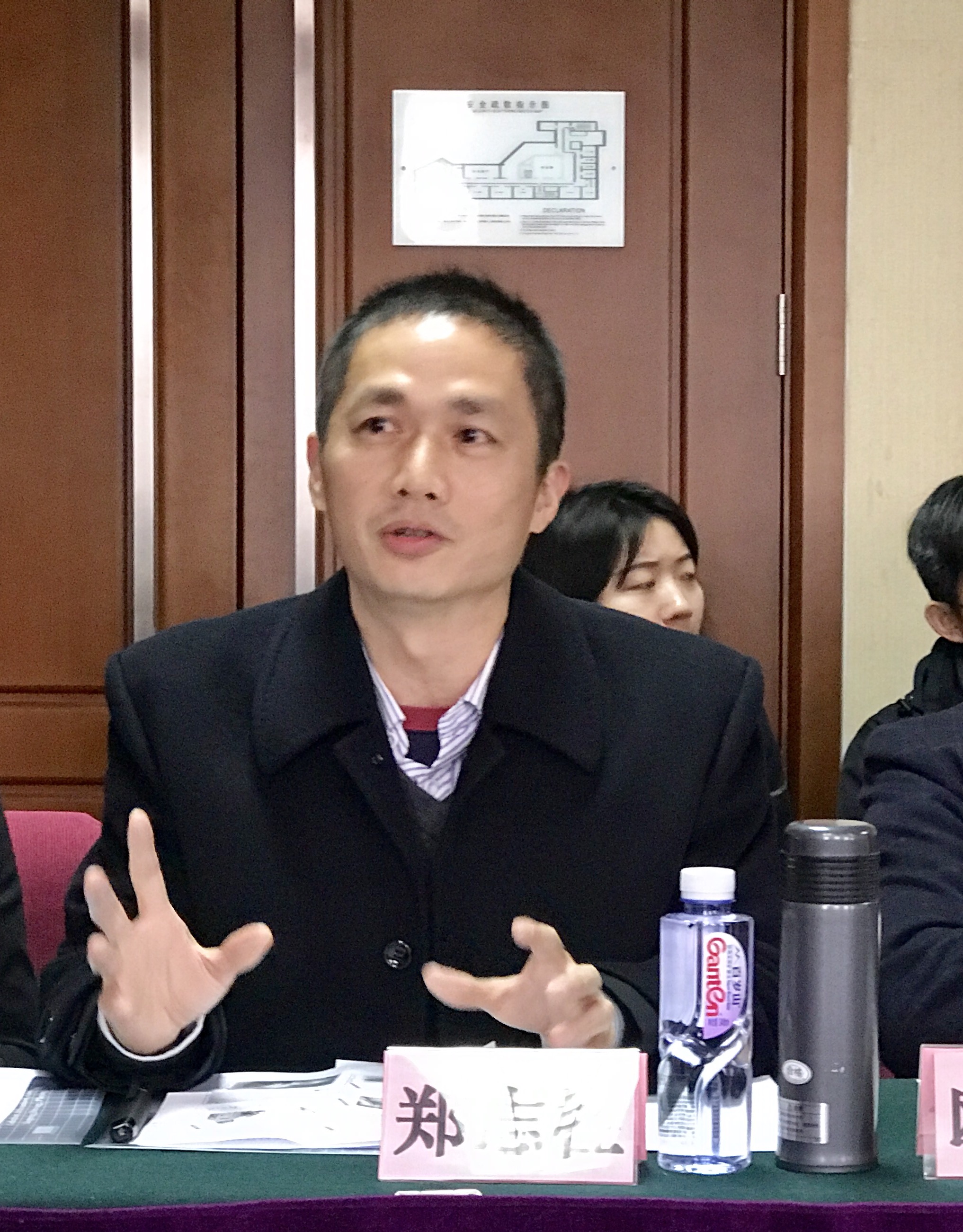
Chinese Supreme Court justices, Jiang Zhipei stands out as an extrovert.
Unlike his more
secretive colleagues, he takes guests on tours of the heavily guarded
Supreme Court building, talks in eager stretches that are light on political
slogans, lectures frequently and runs a Web site devoted to his avowed
mission: promoting patent, copyright and trademark rights in a country
seemingly awash in counterfeits.
Jiang, the chief
justice of the Property Rights Tribunal of the Chinese Supreme People's
Court, acknowledges that serving as China's top arbiter of intellectual
property rights, or IPR, is often thankless.
Foreign companies
complain that Chinese patent and copyright laws are ineffective, and
Washington's warnings against Chinese piracy of films, music, software,
medicine and machines have become a diplomatic mantra.
But China is making
more progress in fighting commercial piracy than critics acknowledge, Jiang
said in a recent interview.
"The U.S. says
China doesn't have intellectual property rights, but just look at how far
we've come from the Cultural Revolution to now, with a complete system of
laws," he said.
"We hope companies
will take their complaints to court and not just to the press."
But Jiang also said
China's intellectual property laws were a work in progress, and his many
public activities have the air of a campaign to assure plaintiffs and
critics that the country is serious about the issue.
"China is moving
slowly forward, but no problem can be solved in an instant," he said.
And in this
country, even the Supreme Court's authority can dwindle at the grass roots.
Local judges often owe their first loyalty to the party bosses who employ
them, and they are reluctant to close scofflaw factories that provide jobs
and revenue, according to experts.
Ultimately, Jiang's
unusual publicity campaign to promote intellectual property law may progress
no faster or more surely than the Chinese legal system as a whole.
Yet even as China
talks about bulking up its law enforcement, some note a kind of tacit
acceptance of a degree of counterfeiting and piracy that is among the most
rampant in the world.
China did not have
a court system to speak of for the first 30 years of Jiang's life, and his
ascent to the highest court parallels the country's path from Maoist
revolution to, at least officially, the rule of law.
Jiang, who is 56
and a native of Beijing, traces his interest in inventions to the Cultural
Revolution, which lasted from 1966 to 1976, when hundreds of thousands of
urban youths like him were "sent down" to toil as peasants in the far
northeast of China. In 11 years on a state farm, he rose to become an
agricultural technician, advising farmers on how to sow crops, fix tractors
and mix fertilizer.
"That experience
sowed my love for solving these kinds of technical legal problems," he said.
"Now this work is my life."
When Jiang joined
the tide of exiled youths returning to Beijing in the late 1970s, Deng
Xiaoping's reformers were trying to restore China's shattered courts. With
only a junior high school diploma, Jiang passed an entrance exam to become a
clerk, and then a junior judge, in a Beijing district court.
"In those days," he
said, "nobody had much property, so most of the civil cases we handled were
divorce cases."
But in the 1990s,
as international investment gathered pace and foreign companies began
pressing for stronger protection of the technology and patents they were
bringing into China, Jiang found a new calling in what was then the exotic
backwater of intellectual property.
China introduced
patent, copyright and trademark laws, and signed treaties to respect
copyright, in the early 1980s, and by the 1990s the Chinese government faced
growing pressure to enforce those laws. Jiang, with graduate law degrees,
leaped from district court to China's highest court, hearing civil disputes
involving foreign parties.
He joined the
Supreme Court's intellectual property division when it was formed in 1996
and became the division's chief justice in 2000.
Now, Jiang usually
arrives at the court about 6:30 in the morning and spends his days hearing
appeals, monitoring decisions by lower courts, training judges and drafting
the "judicial interpretations" that make binding law for lower courts in
China, as well as updating his Web site.
Each task seems to
involve a delicate balancing act between legal principles and the messy flux
of China's breakneck development.
Most recently,
Jiang has been writing judicial guidelines about whether royalties should be
collected from karaoke song machines. He has decided that they should but
that the royalties should not be as large as in developed countries.
"To expect China to
reach the same level of intellectual property rights as developed countries
in one leap is just unrealistic," Jiang said, "and to ask the same of the
public is also unrealistic."
Last year, Chinese
courts dealt with 12,205 civil intellectual property cases, an increase of
32 percent from 2003 and a few dozen two decades ago.
In the first
quarter of this year, the number of cases grew by 39 percent from a year
earlier. All but 4 percent of those cases were between local litigants, not
multinational corporations, Jiang said.
"Domestic companies
are the real impetus for improving IPR," he said.
On Sept. 19,
Shanghai Busheng Music Culture Media, a joint venture of EMI Group and a
local company, successfully sued Baidu.com, one of the most popular Chinese
search engines, for allowing Internet users to locate pirated-music Web
sites.
A court in Beijing
ordered Baidu to stop the service, which is widespread among nearly all of
China's major search sites, and fined it the equivalent of $8,400.
Even some of its
critics say the central government and higher courts are edging toward
stronger protection of intellectual property rights.
A recent survey by
the American Chamber of Commerce in China found that the proportion of U.S.
executives in China who said its protection of such rights was "effective"
rose to 20 percent this year from 9 percent in 2004.
"Now we're at the
point where there are genuine and significant improvements in the legal
framework," Peter Wang, a lawyer with Jones Day in Shanghai, said of Chinese
intellectual property laws. "But our clients are also coming to have higher
expectations of us and the courts."
But even as Chinese
courts are becoming more assertive, the rapid growth of the economy and the
ease and sophistication of copying technology are enabling piracy to outpace
the courts, many say - not unlike in the West.
"China's inadequate
IPR enforcement is resulting in infringement levels at 90 percent or above
for virtually every form of intellectual property," the Office of the U.S.
Trade Representative concluded this year in a report on the issue, citing
submissions from U.S. business groups.
Two-thirds of
counterfeit goods seized at U.S. ports in 2004 came from China, it said.
Jiang said foreign
companies often complained to newspapers and their own politicians without
taking their complaints to Chinese courts.
"They should
complain less and act more," he said.
But he also said
China's battle against commercial piracy was hampered by inadequate
resources, even in his own court, which has just one administrator to serve
the eight justices hearing intellectual property cases.
Beyond Beijing and
other big cities, China's antipiracy resources are even more stretched,
observers have said.
China's 3,000
country courts and 404 intermediate courts have little incentive to spend
money and time on intellectual property cases, said Andrew Mertha, assistant
professor of political science at Washington University in St. Louis,
Missouri, and author of "The Politics of Piracy: Intellectual Property in
Contemporary China."
The disputes often
involve complex claims, and courts have difficulty collecting the evidence,
he added.
Anticounterfeiting
efforts also often face stiff resistance from local officials, who may be
more concerned about jobs and taxes, and illicit payoffs, than about
companies' complaints.
Judges increasingly
tend to find in favor of plaintiffs who can show clear infringement, but
obtaining effective enforcement is another matter.
"The fact that you
get a judgment in Beijing doesn't mean you get enforcement elsewhere," said
Peter Yu, a specialist on Chinese intellectual property law at the Michigan
State University College of Law. "If you close down a factory, you're
converting a foreign problem into a local problem."
Mertha, the
professor at Washington University, said, "Lower courts are still very much
under the control of local governments and just don't see IPR theft as an
especially egregious offense, so that's where the real fight is. At the
local level, things are moving ahead at a snail's pace, but at the central
level and the Supreme Court things are moving faster."
One of Jiang's
solutions to these obstacles was to start a Web site in 1999 to promote
intellectual property laws. The site, China IPR Judicial Protection (www.chinaiprlaw.cn),
has drawn 810,000 visits since then.
Jiang offers an
e-mail service for users to lodge complaints, and every day 10 or more
people write to him with questions and complaints about lower courts'
rulings.
"It's a very
specialist site, and there aren't any good-looking pictures or ads on it, so
that's pretty good," he said.
Not even Jiang
expects piracy in China to disappear soon. And like the rest of the Chinese
legal system, its intellectual property laws have young, shallow roots.
Jiang said pressure
from the outside, even from Washington, could not work any faster than the
pace at which the Chinese legal system matured.
On Aug. 3, for
example, hundreds of protesters surrounded the local court in the northern
city of Yulin, where they beat up more than a dozen judges and held the
chief judge hostage for several hours. The protesters were employees of a
clothing company, Yanglaoda, who objected to a ruling on its disputed
trademark, The China Economic Times reported.
"In foreign
countries like America and Germany, the authority of the judiciary is
stronger," Jiang said.
"But China faces
even more problems in building a legal system. There are many challenges and
crises facing us, and the intellectual property crisis isn't the most
serious."
|