|
The country's trademark watchdog has stepped up its efforts to
improve the administration of trademarks, protecting their
exclusive rights of use and maintaining the reputation of
well-known brands.
The State Administration for Industry and Commerce (SAIC) and its
local branches conducted a nationwide campaign from mid-July to
September, targeting trademark violators.
The campaign has cracked down on more than 7,770 trademark
violations and shut down around 1,150 factories and workshops
which made fake products.
Special efforts have been made in seven areas where large amounts
of counterfeited products are sold -- Beijing and Shanghai
municipalities, Zhejiang, Jiangsu, Shandong, Guangdong and Fujian
provinces.
Industrial and commercial administrations have harshly dealt with
infringements involving products such as foodstuffs, drugs and
agricultural materials that are closely related to public safety
and health.
Law enforcement officers have seized a number of counterfeit
products related to domestic famous brands including Great Wall,
Wuliangye, Tsingtao, Yili and Jianlibao.
Apart from fake domestic brand-name products, a number of
counterfeits of foreign famous brands including Nike, Boss, Gucci,
Louis Vuitton, Adidas, Samsung, Honda, Bosch, Polo, Sony,
Burberry, Lancome, Playboy and Panasonic were also seized.
For example, the Beijing Industrial and Commercial Bureau has
taken steps to ensure trademark protection at Xiushui Street (Silk
Alley), Yaxiu, and Hongqiao, some of the shopping areas in Beijing
that are popular with foreigners.
The Beijing authorities have suspended 40 stands in the capital's
Hongqiao Market which sold fakes with famous foreign trademarks.
Any shops or stands that sell Louis Vuitton, Givenchy, Fendi,
Chanel, Burberry and another 20 foreign trademarks will be
regarded as trademark violators and seriously punished.
A hotline -- 12315 -- has opened to the public to report trademark
violations.
According to statistics from the SAIC, local authorities checked
more than 80,000 shops and stands in more than 27,660 markets
across the country by mid-September. Officials have discovered
1,493 foreign-related trademark violation cases and seized more
than 2 million counterfeit products.
Officials have also confiscated around 6.5 million fake foreign
trademark labels which are ready for use on counterfeit products
and 10,000 items of equipments to make fake trademark labels.
Trademark matters
Since the country joined the World Trade Organization (WTO)
three years ago, China has revised its trademark laws and
regulations to bring them more in line with WTO rules and to
provide companies with a better business environment with regard
to intellectual property protection.
China employs a centralized trademark registration system. The
Trademark Office within the State Administration for Industry and
Commerce is responsible for the registration and overall
administration of trademarks.
The local administrations of industry and commerce have
established trademark offices to handle local trademark
administration and enforcement.
The Trademark Review and Adjudication Board under SAIC is
responsible for handling trademark registration disputes.
China employs a "first-to-file" system for trademark
registrations, rather than the "first-to-use" system generally
adopted in countries such as the United States.
China's requirements for obtaining a trademark registration are
basically the same as those in most countries, namely, the
trademark must be distinctive, and must not conflict with an
existing registration.
The Trademark Office has a centralized database of all registered
or applied-for trademarks.
A trademark application which passes the preliminary screening
will be published in the Trademark Office's gazette for public
objection for a three-month period.
Leeching on well-known trademarks
According to China's Regulation for Evaluating and
Managing Famous Trademarks, famous trademarks refer to those
registered trademarks that are well-known to certain groups of
people and have a higher fame on markets and, therefore can enjoy
both administrative and judicial protection in China.
In China, SAIC is responsible for evaluating famous trademarks.
Holders of domestic and foreign famous brands can apply with SAIC
for protection. Brand holders could also appeal to court for
recognition of their famous status.
Corporation names, however, are regarded as a seperate
intellectual property, and are approved by corporation
registration offices under SAIC.
"Technical problems and system differences between the trademark
and corporation registration procedures have created an obstacle
in trademark protection," said Zhang Ming, an official with the
Corporation Registration Office under SAIC.
There are more than 4,000 corporation registration stations across
the country.
Currently, the databases of all these stations are not linked
nationwide, which makes it hard for registration officials to spot
trademark infringements when dealing with an application for
corporation registration.
"To prevent companies from registering using the similar names of
famous trademarks, a well-known corporation and trademark database
needs to be established as soon as possible," said Lu Pushun,
secretary-general of China branch of the International Association
of Intellectual Property Rights Protection.
The loophole in trademark and corporation registration procedures
has sparked a conflict between trademarks and the names of
corporations, yielding a group of companies which lean on
well-known trademarks as cash cows, said Liu Min, an official with
the Fair Trade Bureau under the State Administration of Industry
and Commerce.
"The administration has co-operated with other government
departments to tackle this hard rock and tried to protect famous
trademarks," Liu said at a seminar on intellectual property rights
protection in Beijing in late November.
Organized by China Industry and Commerce News, the seminar focused
on stopping businesses from registering trademarks or company
names similar to brandname trademarks or products.
Experts taking part in the seminar exposed the actions of
dishonest companies which had taken advantage of famous trademarks
by trying to copycat the brand names.
Some misleading trademarks are reproductions, imitations or
translations of well-known trademarks, creating confusions among
consumers, officials said.
Some companies even registered other famous trademarks as their
corporate names on the Chinese mainland and highlighted the
company names when selling their own goods to mislead consumers.
Some companies registered famous trademarks as their corporate
names overseas and sell goods on the Chinese mainland in the name
of the entrusted companies of those famous brand names.
SAIC has received an increasing number of complaints on unfair
competition using others' famous trademark as corporate names, Liu
said.
Different departments under the administration, including the
Trademark Office, the Corporation Registration Office, the Fair
Trade Bureau, Foreign Corporation Registration Office and Law and
Regulation Department, have made joint efforts to crack down on
dishonest companies which leaned on well-known trademarks.
The administration has been working with judicial departments and
courts to establish a unified standards to deal with the trademark
violation cases.
The Supreme People's Court is preparing to issue a judicial
interpretation on trademark and corporate name conflicts, enabling
registered trademarks or corporations to own two or more formally
legal intellectual rights.
The Supreme People's Court has made a draft on guidelines of
intellectual property right disputes over conflicted rights.
Hailing the principles of honesty and credibility, protecting the
first to file and fair competition, courts at all levels have been
urged to carefully define the parties' legal rights in trademark
and corporation name conflicts.
Before the launching of the draft guidelines, many local courts
have accumulated rich experience in handling intellectual property
rights cases.
Courts at different levels in Central China's Hubei Province have
heard more than 100 unfair competition cases in the past six
years, including 29 cases of well-known trademark imitation cases.
The High People's Court in East China's Jiangsu Province have
heard 21 cases of second-instance intellectual property rights
conflicts, including eight cases of conflicts between trademarks
and corporation names.
Above all, the fundamental task in protecting trademark rights is
to prevent trademark infringement in advance through stricter and
more scientific registration measures, said Zhang.
Zhang said his office will study corporate name management and has
tried to input well-known trademarks into their system to prevent
companies from registering under others' famous trademarks.
To better protect famous trademarks, a standard national bulletin
platform will soon be launched to provide more information to
related companies and help improve their awareness of trademark
protection, Zhang said.
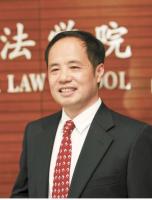
Sheng Jiemin, a law professor from Peking University argued that
more laws and regulations need to be made to better protect
intellectual property rights.
"The amendment to the present Anti-Unfair Competition Law is
expected to be launched soon to better tackle the emerging
problems on the ever-changing market," Sheng said.
Sheng called on courts and administrative bodies to make more
detailed regulations on intellectual property rights protection. |